
Tilburg University · Tilburg
Tilburg University · Game Lab
Finding out when a game works, and for whom.
Under construction in EnglishTilburg University · Game Lab has not yet delivered this page in English. What you read here is a translation by BRIX of the Dutch page, which is the reference. View the Dutch page
Access
- On request
- With permission from the lab coordinator and supervision
In the innovation journey
ExperimentYou try out ideas quickly with something tangible, such as a sketch or simple demo. That shows what works before you invest.ValidateYou test with real users whether it works, and record that it does what you promise. That evidence convinces critical parties.
Expertise
Expertise · 5 keywords
- AI & Intelligent Interaction
- Affective computing & emotion sensingTechnology that recognises emotions from the face, voice or body, and responds to them. · Adaptive & personalised experiencesExperiences that adjust to the user, for example to their level, preferences or responses.
- Simulation, Learning & Assessment
- Serious gamingGames with a serious purpose, such as learning, training or changing behaviour.
- Data, Platforms & Integration
- Telemetry & analyticsAutomatically recording what users do in an application, and analysing that data.
- Deployment, Events & Live Operations
- Esports & competitive gamingOrganised, competitive video gaming, for players and spectators.
Who it's for
IX makers · Businesses · Startups · Researchers · Government · Education
What this lab stands for
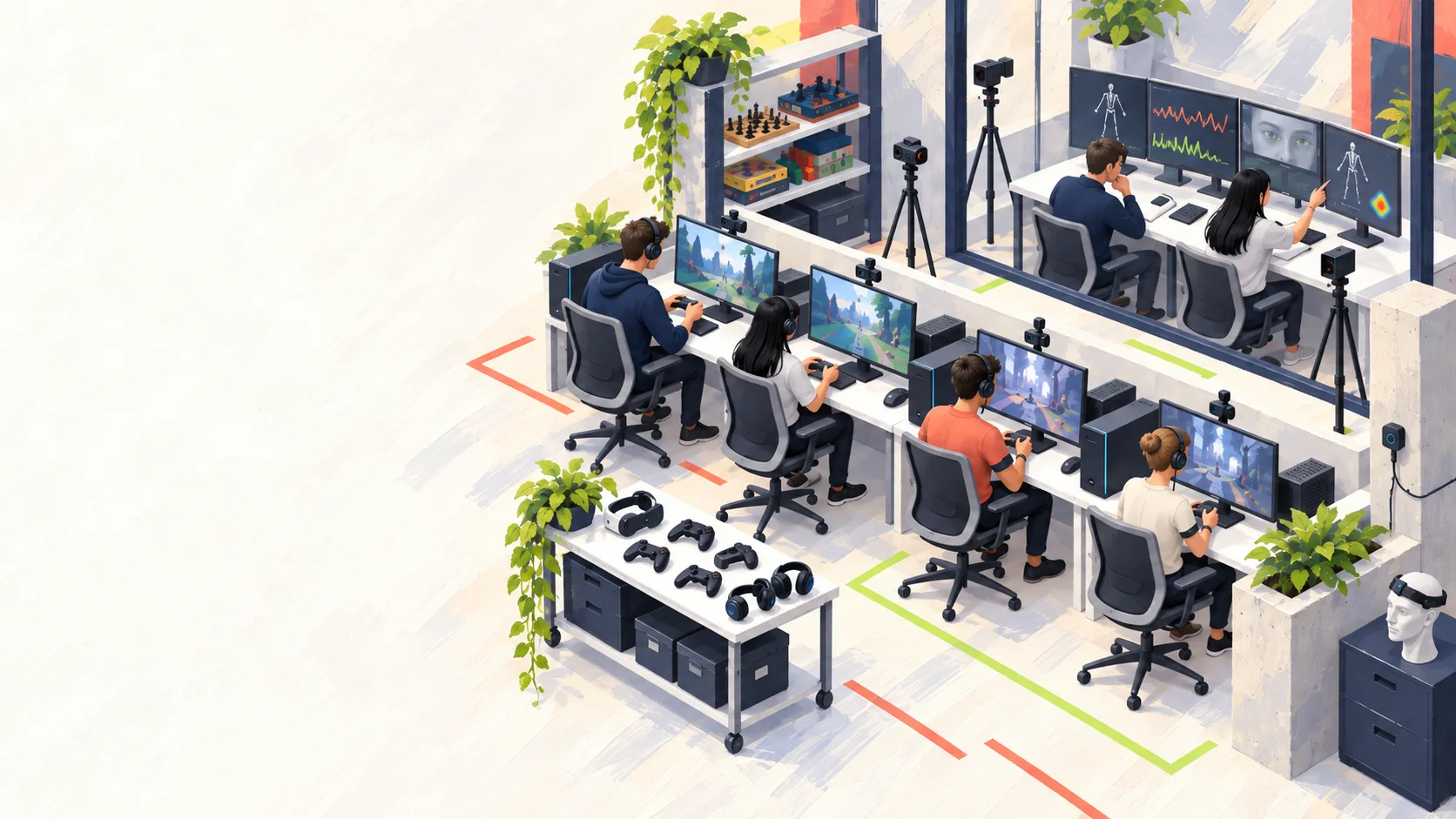
The Game Lab studies how people interact with games, from video games to board games. Ten players at once, with data on behaviour, facial expression, eye movements and body signals.
When do people enjoy a game, and when do they learn something from it? This lab finds out with data. Ten powerful gaming PCs let players play alone, in teams or against each other. Biofeedback sensors, webcams and eye tracking record what happens.
Researchers use this for intelligent game characters, difficulty that adapts to the player and game worlds generated while you play. Applications range from esports and teamwork to rehabilitation, crisis training and professional education.
What we are setting up for BRIX
What Tilburg University · Game Lab is building as part of the CIIIC programme.
Tilburg University is renewing the Game Lab in MindLabs, one of its four research labs for BRIX. Outdated equipment is replaced, and support for instruction and access is added. Through BRIX, you can commission research into when a game works and for whom, carried out by specialised researchers.
Expertise
5 keywords from the BRIX taxonomy, across 4 themes.
AI & Intelligent Interaction
- Affective computing & emotion sensingTechnology that recognises emotions from the face, voice or body, and responds to them.
- Adaptive & personalised experiencesExperiences that adjust to the user, for example to their level, preferences or responses.
Simulation, Learning & Assessment
- Serious gamingGames with a serious purpose, such as learning, training or changing behaviour.
Data, Platforms & Integration
- Telemetry & analyticsAutomatically recording what users do in an application, and analysing that data.
Deployment, Events & Live Operations
- Esports & competitive gamingOrganised, competitive video gaming, for players and spectators.
Services
Every way to work with Tilburg University · Game Lab, ordered by the phase where you step in. Click through for the full service, and the other labs that deliver it.
Not sure yet what you need? That's what the intake is for. Free and without obligation, and you'll hear from us within five working days.
Book an intake with Tilburg University · Game Lab